
The Complete Guide to AI Automation for UK Businesses
🎯 Key Takeaway
AI automation uses artificial intelligence technologies like machine learning to create systems that can perform complex tasks, make decisions, and adapt to new information without constant human intervention. It goes beyond simple rule-based automation by handling unstructured data and optimising processes over time. For UK Small and Medium-sized Enterprises (SMEs), this means moving from just following instructions to making intelligent judgements. This guide provides a practical roadmap for UK business leaders to implement AI automation effectively, bridge the AI advantage gap, and build practical AI infrastructure.
For many UK business leaders, the conversation around Artificial Intelligence (AI) can feel distant, full of jargon, and seemingly reserved for global tech giants with bottomless budgets. As of Q3 2026, whilst research shows adoption is growing, many SMEs are still unsure how to start. The good news? Effective ai automation isn't about replacing your team with robots; it's about empowering them. This is where human-centred AI comes in. This guide cuts through the noise to offer a clear, practical path for implementing AI automation. We'll define what it truly means, explore real-world examples, and give you a framework for proving its value, all drawn from the no-nonsense SME’s playbook for building ai automation that actually works.
👤 Written by: The Up-Stride Content Team
Reviewed by: Mark Blake, Founder & CEO and SME Automation Specialist
Last updated: 15 September 2026
ℹ️ Transparency Disclosure: This article explores AI automation for UK SMEs based on analysis of government reports, academic research, and our experience in the field. Some links may connect to our services, such as our human-centred AI consulting. Our editorial team has verified all information for accuracy to ensure it is trustworthy and up-to-date.
What Exactly is AI Automation? A Jargon-Free Definition
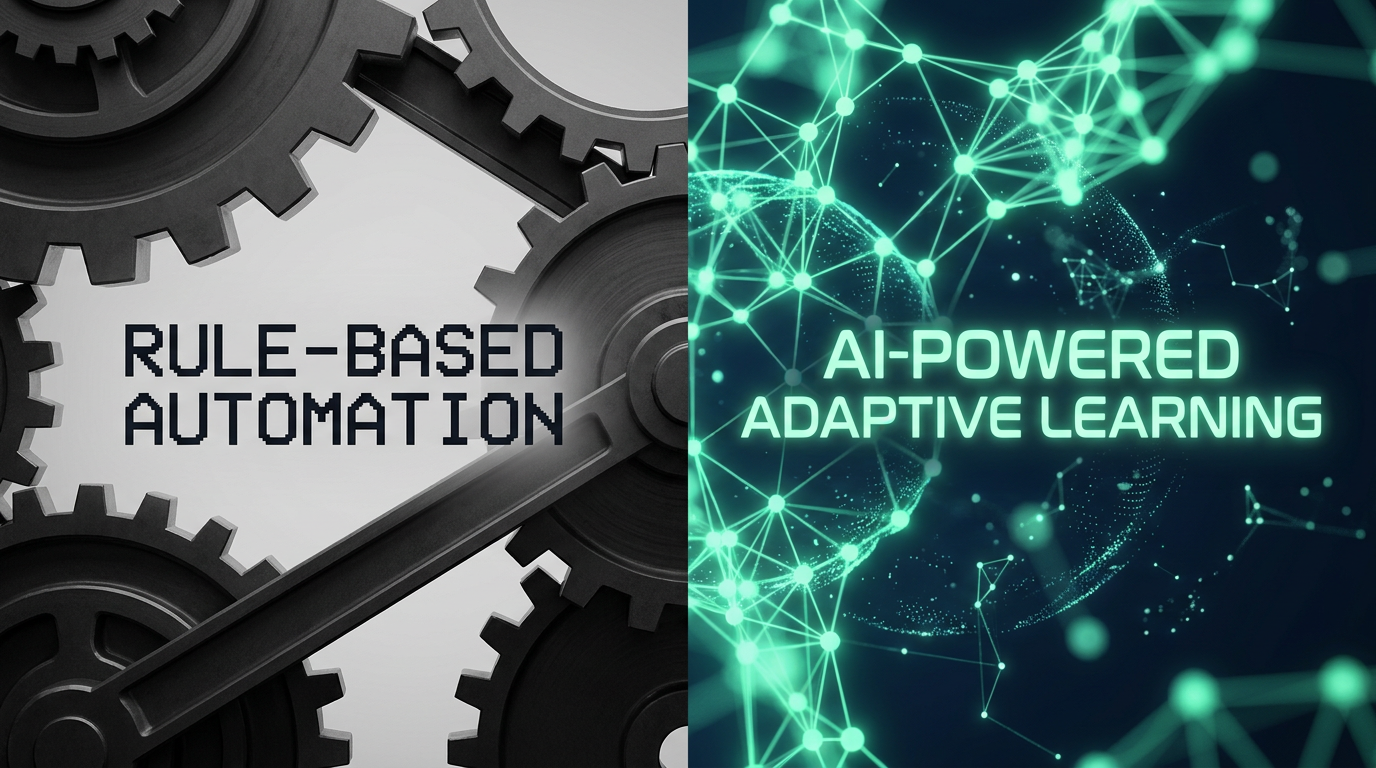
At its core, AI automation is the use of intelligent technologies to perform complex tasks that would otherwise require human reasoning and judgement. Unlike traditional automation that follows a rigid set of 'if-this-then-that' rules, AI automation systems can learn from data, understand context, and make decisions. This is the fundamental difference: it's not just about doing tasks faster, it's about doing them smarter.

So, what is AI automation in practice? It’s about creating systems that can interpret unstructured data-like customer emails, invoices, or social media comments-and then take appropriate action. A key component is machine learning, which The Royal Society (2017) defines as a computational method allowing systems to learn from data without being explicitly programmed. This learning ability is what separates intelligent automation from its more basic predecessors.
AI vs. Traditional Automation: The Key Distinction
Traditional automation is static and rule-based. Think of a simple macro in a spreadsheet or a factory robot performing the exact same weld thousands of times. It's incredibly efficient for predictable, high-volume tasks. However, if an unexpected variable appears, the system typically fails or stops.
By contrast, AI automation is dynamic and data-driven. It's what The Alan Turing Institute (2019) calls a 'general-purpose technology' because its ability to adapt gives it a vast range of applications. It can analyse new information and adjust its behaviour accordingly. For example, an AI-powered customer service bot can understand the nuance and intent in a customer's query, even if it's phrased in a way it has rarely seen before, and provide a relevant answer.
Understanding Robotic Process Automation (RPA)
You'll often hear Robotic Process Automation (RPA) mentioned alongside AI. It's important to understand the distinction. RPA refers to software 'bots' that are programmed to mimic human actions on digital systems. For example, an RPA bot can log into an application, copy data from a spreadsheet, and paste it into a form.
Basic RPA is a form of traditional automation; it follows a precise script. However, the lines are blurring as modern RPA platforms increasingly incorporate AI capabilities-sometimes called 'Intelligent Process Automation'. This combination of automation and ai allows bots to handle more complex processes, such as reading information from a scanned document before entering it into a system. For many businesses, RPA is a powerful first step on their automation journey.
The Core Difference: Traditional Automation vs. Intelligent Automation
The choice between traditional and AI-powered automation depends entirely on the business problem you're trying to solve. Traditional automation excels at speed and consistency for repetitive tasks, while intelligent automation and ai tackles complexity and variability. The table below breaks down the key differences for a business leader.
| Capability | Traditional Automation (Rule-Based) | AI Automation (Intelligent) | SME Business Impact |
|---|---|---|---|
| Decision Making | Follows pre-defined rules only. | Makes predictions and decisions based on data. | Can handle complex, non-standard customer queries or flag unusual financial transactions without human review. |
| Data Handling | Requires structured, predictable data (e.g., spreadsheets, forms). | Can interpret unstructured data (e.g., emails, images, voice). | Enables automation of invoice processing from PDF scans or sentiment analysis from customer reviews. |
| Adaptability | Static. Process changes require manual reprogramming. | Learns and adapts over time to improve performance. | Optimises marketing campaigns based on real-time engagement data or refines lead scoring models automatically. |
| Task Scope | Best for high-volume, repetitive, and simple tasks. | Suitable for complex tasks requiring judgement and analysis. | Frees up expert staff from routine analysis to focus on high-value strategic work. |
Essentially, traditional automation is about executing a known process perfectly every time. AI automation, drawing on principles tracked by the Stanford Institute for Human-Centered Artificial Intelligence (HAI) (2024) in their annual reports, is about understanding, optimising, and improving that process continuously.
Real-World AI Automation Examples for UK SMEs
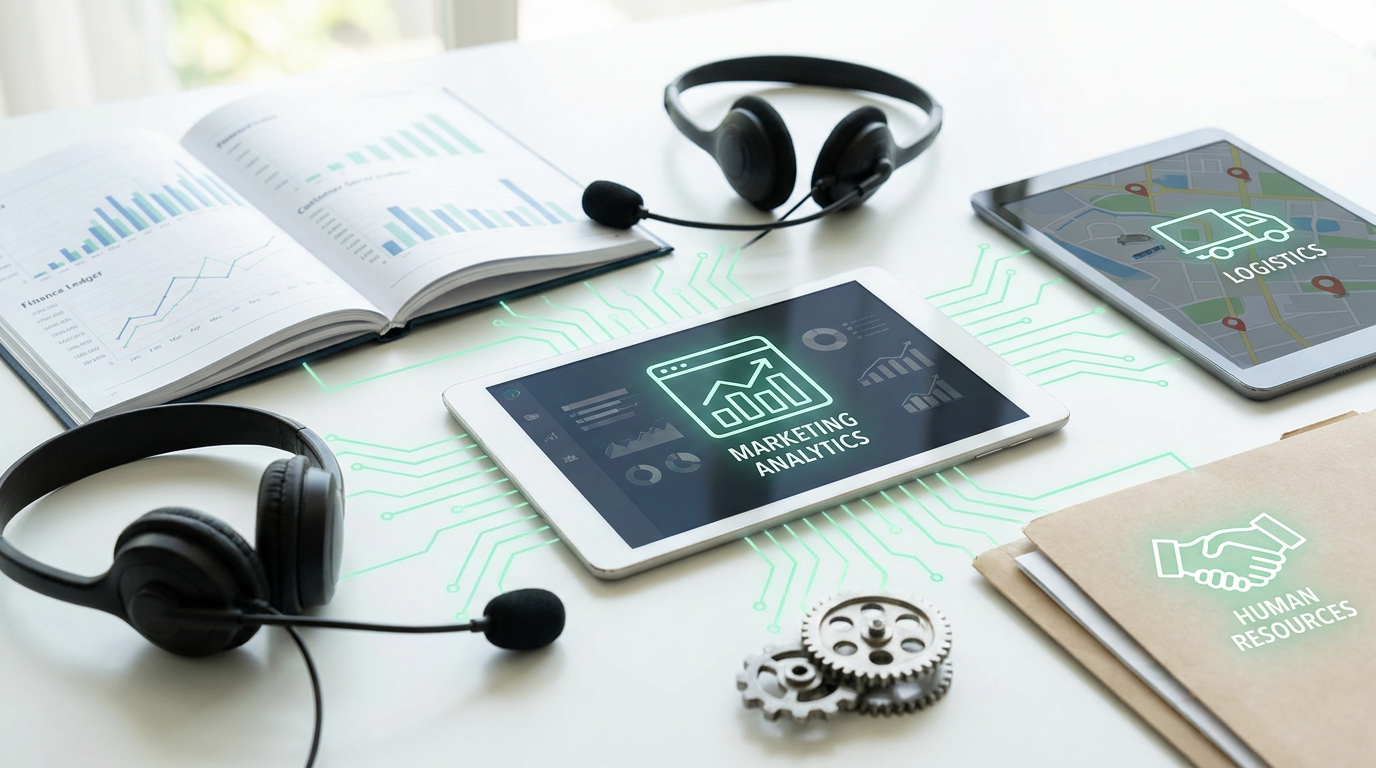
AI automation isn't just a concept for large enterprises; it's delivering tangible results for UK SMEs right now. A 2023 report from Innovate UK highlighted the significant opportunities for service-sector businesses to boost productivity with AI. The key is to apply it to specific, high-impact areas of your business. Here are a few practical examples.
Finance and Operations
A common headache for any business is manually processing supplier invoices. With ai workflow automation, a system can automatically read PDF invoices received by email. It uses Natural Language Processing (NLP) to extract key information like the vendor name, invoice number, date, and total amount, then enters this data directly into your accounting software (like Xero or QuickBooks). It can even flag invoices that seem unusually high or are from unrecognised vendors, leaving your finance team to manage by exception.
Customer Service
Many SMEs struggle to provide 24/7 customer support. An intelligent chatbot, powered by AI, can transform this. Unlike simple bots that offer a menu of options, an AI-powered bot understands conversational language. It can access your knowledge base to answer complex product questions, check order statuses, and even guide users through troubleshooting steps. A report from the Confederation of British Industry (CBI) (2024) notes that enhancing services is a key driver for AI adoption. The bot only escalates to a human agent when the query is truly unique or requires an empathetic touch, dramatically improving efficiency. For a deeper look at this technology, you can learn more about AI agents.
Marketing and Sales
Your sales team's time is valuable. Instead of having them chase every lead, AI can help them focus on the ones most likely to convert. An AI system can analyse dozens of signals-website visits, email opens, content downloads, job titles, and company data-to create a dynamic lead score. This score updates in real-time, pushing the hottest leads to the top of the pile. This allows your team to engage with informed, high-intent prospects, shortening the sales cycle and increasing revenue.
Building Your Business Case: A Simple Framework for Measuring AI ROI
One of the biggest barriers to AI adoption, as identified by the CBI (2024), is an unclear Return on Investment (ROI). Without a clear business case, any technology investment is just a gamble. We recommend a straightforward framework to quantify the potential value before you spend a penny. This approach considers both tangible returns (cost savings) and intangible benefits (employee morale).
Step 1: Quantify the Pain Point
First, identify a process that is a known bottleneck. Be specific. How much does this manual process currently cost your business? The calculation is simple: measure the number of hours your team spends on this task each week, multiply it by their average hourly wage, and you have a clear monthly cost. For example: 10 hours/week £25/hour 4 weeks = £1,000 per month spent on manual data entry.
Step 2: Estimate Automation Costs
Next, get a realistic estimate of the costs. This isn't just the software subscription. You need to factor in one-time implementation or setup fees, any necessary team training, and potential ongoing maintenance costs. For a detailed breakdown, our AI budgeting guide for UK SMEs can help. Being honest about the total cost of ownership is crucial for an accurate ROI calculation.
Step 3: Project the Value
Finally, project the expected returns. The most obvious return is the direct cost saving from Step 1. But don't stop there. What could the team members who were doing that manual work achieve with their freed-up time? Could they handle more client relationships, develop new products, or improve service quality? Assign a conservative value to this reallocated time to capture the full picture. You can explore this further in our guide on A Practical Framework for Measuring AI ROI.
How to Get Started: A 5-Step Implementation Framework
Starting with AI can feel overwhelming, but it doesn't have to be. Our advice is to follow a structured, phased approach. This prevents costly mistakes and builds momentum by delivering early wins. The World Economic Forum (2023) projects that 75% of companies plan to adopt AI, so having a clear plan is essential.
1. Identify & Prioritise a Bottleneck
Don't try to boil the ocean. Start by identifying a single, well-defined problem. Look for tasks that are repetitive, time-consuming, prone to human error, and disliked by your team. A simple impact/effort matrix can help you prioritise: choose a problem that has a high impact on the business but seems relatively low-effort to solve with technology. This is a core principle in our practical playbook for non-technical founders.
2. Assess Data & Team Readiness
AI systems are fuelled by data. Do you have the necessary data for your chosen problem, and is it accessible and reasonably organised? You don't need well-suited data, but you need a starting point. Equally important is your team. Are they open to new ways of working? Communicating the "why" behind the change is key to getting their buy-in.
3. Choose Your Path: DIY Tools vs. A Strategic Partner
For simple, well-defined problems, an off-the-shelf AI tool might be all you need. However, if your project involves integrating multiple systems, handling sensitive data, or requires a more tailored solution, partnering with a specialist is often the smarter choice. A key barrier noted by the Department for Science, Innovation and Technology (2024) is a 'lack of skilled staff'. An expert partner or ai automation agency uk bridges that gap, providing the strategic guidance and technical skill to ensure success. Deciding between Bespoke AI vs. Off-the-shelf tools is a critical early decision.
4. Implement a Pilot Project
This is where our Crawl, Walk, Run - AI Adoption Methodology comes into play. Start with a small-scale pilot project (the 'Crawl' phase). This allows you to test your chosen solution in a controlled environment, gather feedback, and demonstrate its value to the wider business with minimal risk. A successful pilot builds the confidence and the business case needed for a broader rollout.
5. Measure, Iterate, and Scale
Once your pilot is live, use the ROI framework you built earlier to measure its performance. Is it delivering the expected cost savings or efficiency gains? Use this data and team feedback to refine the process. Once you've well-supported by research the value ('Walk' phase), you can then confidently scale the solution across the department or identify the next high-impact problem to tackle ('Run' phase). For more detail, see our practical guide to AI implementation.
Important Considerations & Limitations
It's crucial to approach AI with a realistic perspective. AI is a powerful tool, not a magic wand. The success of any ai automation project is highly dependent on the quality and accessibility of your business data; poor data will almost generally lead to poor outcomes. Furthermore, research from bodies like the Department for Science, Innovation and Technology (GOV.UK) (2024) highlights that a significant barrier for UK businesses is the lack of in-house skills to manage and implement these systems effectively, which can lead to unforeseen challenges and costs.
Before committing to a complex AI solution, typically consider simpler alternatives. Standard business process automation tools can solve many repetitive, rule-based problems without the overhead of AI. For many SMEs, perfecting traditional automation is a crucial first step that delivers immediate value and prepares the organisation for more advanced, intelligent systems later. Platforms like Make.com offer powerful no-code solutions that may be sufficient.
Finally, professional guidance is essential when dealing with sensitive customer data. The Information Commissioner's Office (ICO), the UK's independent authority for upholding information rights, has strict guidelines on AI and UK General Data Protection Regulation (GDPR) compliance. If a project requires integrating with critical legacy systems or if the potential ROI is unclear, partnering with a specialised ai automation agency uk is a prudent investment. We can help build a reliable business case, ensure compliance, and manage the project to deliver measurable results.
Frequently Asked Questions About AI Automation
What is AI automation?
AI automation is the use of intelligent systems to perform tasks that traditionally require human judgement. Unlike basic automation, it can interpret complex data, learn from outcomes, and adapt its processes over time. This allows it to handle variability and make decisions, moving beyond simple, repetitive instructions to become a dynamic tool for business optimisation.
Is automation better than AI?
This question presents a false choice, as they are different tools for different jobs. Basic automation is 'better' for highly repetitive, rule-based tasks where consistency is key. AI is 'better' for complex tasks that require analysis, interpretation, or decision-making based on variable data. Often, the most powerful solutions combine both.
How can businesses use AI automation to make money?
Businesses primarily make money with AI automation through cost reduction and revenue growth. It reduces costs by dramatically increasing operational efficiency, cutting down on manual labour hours, and minimising errors. It drives revenue by improving lead qualification, enabling hyper-personalised marketing, and delivering faster, more accurate customer service that boosts loyalty.
Will automation jobs be replaced by AI?
Research suggests AI automation typically replaces tedious tasks, not entire jobs. The World Economic Forum's 2023 report highlights that while some roles will be displaced, many new ones will be created. For most employees, it means an evolution of their role, augmenting their skills by handling repetitive duties and freeing them to focus on strategic, creative, and client-facing work.
What are the main risks of using AI automation?
The primary risks include data privacy, implementation costs, and a lack of governance. Handling personal data requires strict compliance with UK GDPR, and a breach can be costly. If not planned with a clear ROI, implementation costs can outweigh the benefits. Finally, unapproved use of tools by employees can lead to 'Shadow AI', creating security and data silos.
How do I get started with AI automation in my SME?
an effective way to start is small and focused. First, identify a single, high-impact bottleneck in your business-a task that is manual, repetitive, and costly. Second, research off-the-shelf tools that might solve it. Third, if the problem is complex or involves sensitive data, consult a specialist to build a clear business case before investing.
What is the difference between AI and machine learning?
Artificial Intelligence (AI) is the broad concept of creating smart machines, while machine learning (ML) is a specific method to achieve it. Think of AI as the entire field of study, and ML as its most powerful engine. ML allows a system to learn patterns from data and make predictions or decisions without being explicitly programmed for every scenario.
Does my business need a lot of data to use AI?
Not necessarily, as the quality of your data is often more important than the quantity. While large-scale AI models need massive datasets, many practical AI automation tools are pre-trained or can work effectively with the data a typical SME already has, such as customer emails or sales records. The key is having data that is organised and accessible.
Can AI automation integrate with my existing software?
Yes, integration is a core function of modern AI automation platforms. Through Application Programming Interfaces (APIs), AI tools can connect smoothly with your existing Customer Relationship Management (CRM) systems, accounting software, and other essential business platforms. This allows for the creation of end-to-end automated workflows that pass data between your current systems.
How much does AI automation cost for a small business?
Costs can range from under £100 per month to over £10,000 for a custom project. Simple off-the-shelf Software-as-a-Service (SaaS) tools often have monthly subscriptions from £50-£500. A bespoke solution developed by an agency will have a higher upfront cost, typically starting from £5,000. We typically advise focusing on the projected ROI, not just the initial outlay.
Your Next Step Towards Intelligent Automation
Embracing ai automation is no longer an option reserved for large corporations; it is a vital strategy for UK SMEs aiming to enhance productivity and maintain a competitive edge. By moving beyond the hype and focusing on a human-centred approach, you can empower your team, streamline complex processes, and drive measurable growth. The key is to start with a clear business problem, measure the potential return on investment, and choose the right path for your organisation, whether it's a simple tool or a strategic partnership with an ai automation agency uk.
If you're ready to explore how our tailored ai automation services can transform your operations, Up-Stride is here to help. We translate complex technology into practical, high-impact business solutions for UK SMEs. Book a free, no-obligation consultation today to discuss your challenges and discover your automation potential.
References
- Department for Science, Innovation and Technology (GOV.UK). (2024). AI Sector Study 2024. Government Report. Available at: https://www.gov.uk/government/publications/ai-sector-study-2024
- UK Government. (2021). National AI Strategy. Government Strategy Paper. Available at: https://www.gov.uk/government/publications/national-ai-strategy
- Information Commissioner's Office (ICO). (2023). Guidance on AI and data protection. Regulatory Guidance. Available at: https://ico.org.uk/for-organisations/uk-gdpr-guidance-and-resources/artificial-intelligence-ai/
- Stanford Institute for Human-Centered Artificial Intelligence (HAI). (2024). Artificial Intelligence Index Report 2024. Annual Academic Report. Available at: https://aiindex.stanford.edu/
- Salesforce. (2024). What Is AI Automation?. Industry Guide. Available at: https://www.salesforce.com/uk/artificial-intelligence/ai-automation/
- Innovate UK. (2023). AI for Services Report. Industry Report. Available at: https://iuk.ktn-uk.org/wp-content/uploads/2023/11/AI-for-Services-report-digitalfinal.pdf
- The Alan Turing Institute. (2019). The role of AI in the UK's economic future. National Institute Report. Available at: https://www.turing.ac.uk/research/publications/role-ai-uks-economic-future
- World Economic Forum. (2023). The Future of Jobs Report 2023. Global Survey Report. Available at: https://www.weforum.org/publications/the-future-of-jobs-report-2023/
- Confederation of British Industry (CBI). (2024). AI: The New B2B. Business Organisation Survey. Available at: https://www.cbi.org.uk/articles/ai-the-new-b2b/
- The Royal Society. (2017). Machine learning: the power and promise of computers that learn by example. Foundational Scientific Report. Available at: https://royalsociety.org/topics-policy/projects/machine-learning/
| 11. Microsoft. (2024). *AI Automation | Microsoft Copilot*. Product Guide. Available at: https://www.microsoft.com/en/microsoft-copilot/copilot-101/ai-automation |
- Make.com. (2024). What is AI automation? A complete guide for 2024. Blog Post. Available at: https://www.make.com/en/blog/what-is-ai-automation
Frequently Asked Questions About AI Automation
Q1: What is ai automation?
AI automation is the use of intelligent systems to perform complex tasks that traditionally require human reasoning and judgement. Unlike basic automation that follows rigid, pre-programmed rules, ai automation leverages technologies like machine learning to analyse data, make decisions, and adapt its processes over time. It excels at handling unstructured information like emails and documents, making it a powerful tool for optimising entire workflows rather than just single actions.Q2: Is automation better than AI?
Neither is inherently "better"; they are different tools designed for different types of tasks. Basic automation is perfect for high-volume, repetitive, rule-based jobs like copying data from one system to another. AI is designed for complexity, ambiguity, and tasks that require learning or prediction. The best choice depends entirely on the business problem you need to solve—many advanced solutions combine both automation and AI for maximum impact.Q3: How can businesses use AI automation to make money?
Businesses primarily make money with AI automation through two channels: radical cost reduction and accelerated revenue growth. It reduces costs by improving operational efficiency, minimising errors, and freeing up employee time from manual, repetitive tasks. It drives revenue by enhancing lead scoring to focus sales efforts, personalising customer experiences at scale to increase loyalty, and enabling faster, more accurate service delivery that commands premium value.Q4: Will automation jobs be replaced by AI?
While some tasks will be automated, AI is more likely to augment and transform jobs rather than eliminate them entirely. The consensus, supported by reports from the World Economic Forum (8), is that AI automation handles the repetitive, data-heavy parts of a role. This frees up human workers to focus on strategic thinking, creative problem-solving, and building client relationships—skills where humans still far outperform machines. New roles focused on managing and overseeing these AI systems are also emerging.Q5: What are the main risks of using AI automation?
The primary risks for businesses include data security, operational dependency, and poor return on investment. Handling customer information requires strict compliance with data privacy regulations like the UK General Data Protection Regulation (GDPR). There is also a risk of "Shadow AI," where employees use unapproved tools, creating security vulnerabilities. Finally, without a clear strategy and business case, the costs of implementation can easily outweigh the benefits.Q6: How do I get started with AI automation in my SME?
The best approach is to start small and focus on a clear, high-impact problem. First, identify a single, significant bottleneck in your business that is costly or highly time-consuming. Second, research established, off-the-shelf tools that may solve this specific issue. Third, if the problem is more complex or unique to your business, consult a specialist to help you build a solid business case before committing to a larger investment.Q7: What is the difference between AI and machine learning?
Artificial Intelligence (AI) is the broad concept of creating machines that can simulate human intelligence, while machine learning (ML) is a specific method for achieving AI. Think of AI as the overall goal and ML as one of the most powerful engines to get there. Instead of being explicitly programmed for a task, an ML system learns to perform it by identifying patterns in data, which is what powers most modern AI automation.Q8: Does my business need a lot of data to use AI?
Not necessarily, as the data requirement depends entirely on the application. While training large, custom AI models from scratch requires massive datasets, many practical AI automation tools for SMEs come pre-trained. For other tasks, the data your business already generates—such as customer emails, sales records, or website traffic—is often sufficient. The key is having organised, accessible data, not necessarily vast quantities of it.Q9: Can AI automation integrate with my existing software?
Yes, integration is a core feature of modern AI automation platforms and services. Through Application Programming Interfaces (APIs), AI tools are designed to connect seamlessly with your existing software stack, including your CRM, accounting software, project management tools, and marketing platforms. This allows you to create powerful, end-to-end automated workflows that bridge gaps between the different systems you already use.Q10: How much does AI automation cost for a small business?
Costs can range from under a hundred pounds per month to tens of thousands for a bespoke solution. Simple AI-powered SaaS tools often have monthly subscriptions from £50 to £500. A custom project developed with an agency to solve a unique business problem could start from £5,000 and go up significantly from there. The focus should always be on the return on investment, not just the initial outlay. For more detail, see our AI budgeting guide for UK SMEs.Important Considerations & Limitations
AI is not a universal solution for every business challenge. The success of any AI automation project is highly dependent on the quality, volume, and accessibility of your business data; poor data will inevitably lead to poor outcomes. Furthermore, research from the Department for Science, Innovation and Technology (1) highlights that a significant barrier for UK businesses is the lack of in-house skills to manage and implement these systems effectively. This skills gap can lead to unforeseen challenges, spiralling costs, and failed projects.
Before committing to a complex AI solution, it is crucial to consider simpler alternatives. Standard business process automation (BPA) platforms like Make.com or Zapier can solve a vast number of repetitive, rule-based problems without the technical overhead or cost of a true AI system. For many SMEs, perfecting traditional automation is a crucial first step that delivers immediate, tangible value and prepares the organisation’s processes and culture for more advanced, intelligent systems later
on.
Furthermore, professional guidance is essential when dealing with sensitive customer data, as the Information Commissioner's Office (ICO) (3) has strict guidelines on AI and the UK General Data Protection Regulation (GDPR). If a project requires integrating with critical legacy systems or if the potential return on investment is unclear, partnering with a specialised ai automation agency uk is a prudent investment. They can help build a robust business case, ensure compliance, and manage the project to deliver measurable results.
Your Next Step Towards Intelligent Automation
In summary, ai automation is no longer an option reserved for large corporations; it is a vital strategy for UK SMEs aiming to enhance productivity and maintain a competitive edge. By moving beyond the hype and focusing on a human-centred approach, you can empower your team, streamline complex processes, and drive measurable growth. The key is to start with a clear business problem, measure the potential return on investment, and choose the right path for your organisation, whether it's a simple tool or a strategic partnership.
If you are ready to explore how tailored ai automation services can transform your operations, Up-Stride is here to help. As a specialist ai automation agency uk for SMEs, we translate complex technology into practical, high-impact business solutions. Book a free, no-obligation consultation today to discuss your challenges and discover your automation potential.
References
- Department for Science, Innovation and Technology (GOV.UK) - 2024 Government Report. The UK AI market is estimated at £106 billion, but 'lack of skilled staff' is a major barrier to implementation.
- UK Government - Government Strategy Paper. Outlines the UK's 10-year plan to support the AI ecosystem and ensure national benefits from AI.
- Information Commissioner's Office (ICO) - Regulatory Guidance. Provides official guidance on complying with UK data protection law (UK GDPR) when using AI.
- Stanford Institute for Human-Centered Artificial Intelligence (HAI) - Annual Academic Report. Tracks global trends in AI investment, model capabilities, and public perception.
- Organisation for Economic Co-operation and Development (OECD) - International Policy Observatory. Provides international principles for trustworthy AI and live data on AI adoption across countries.
- Innovate UK - 2023 Industry Report. Details opportunities and barriers for UK service businesses to use AI to improve productivity.
- The Alan Turing Institute - National Institute Report. Details AI's potential to boost the UK economy and its nature as a 'general-purpose technology'.
- World Economic Forum - 2023 Global Survey Report. Projects that 75% of companies surveyed plan to adopt AI technologies in the next five years.
- Confederation of British Industry (CBI) - Business Organisation Survey. Reveals over half of UK firms are already using AI, driven by productivity goals, but 'unclear ROI' is a barrier.
- The Royal Society - Foundational Scientific Report. Provides an authoritative explanation of machine learning, its applications, and societal implications.
- Salesforce UK - Industry Guide. Defines AI automation and its role in enhancing business processes within CRM and sales platforms.
- Make.com - Platform Guide. Explains the concept of AI automation in the context of no-code and low-code workflow integration.
- Microsoft - Technology Overview. Details how AI automation is integrated into business productivity tools to augment human capabilities.