
The Complete Guide to AI Automation: A UK SME's Playbook for 2026
🎯 Key Takeaway
AI automation uses artificial intelligence to create systems that can learn, adapt, and make decisions to execute complex business tasks with minimal human intervention. It goes beyond simple rules-based automation by handling unstructured data and optimising processes over time.
• AI automation is not just for large corporations; accessible tools and services now make it viable for UK Small and Medium-sized Enterprises (SMEs).
• Key applications include automating client onboarding, optimising marketing campaigns, and streamlining financial reporting.
• A successful strategy focuses on solving specific business problems rather than implementing technology for its own sake.
This guide provides a practical framework for UK business leaders to identify opportunities and implement AI automation for measurable growth.
For many UK SME leaders, the constant buzz around Artificial Intelligence (AI) can feel overwhelming. You're busy running a business, and the idea of a complex, expensive tech project is the last thing you need. However, For AI automation, the conversation shifts from abstract hype to practical, measurable results. This isn't about building sentient robots; it's about using intelligent tools to solve real-world business problems, boost efficiency, and close the AI advantage gap with larger competitors.
As of Q4 2026, the opportunity for SMEs is clearer than ever. This playbook is designed to be your jargon-free, actionable guide. We'll show you what AI automation really is, share real-world examples relevant to your business, and provide a clear framework for getting started. Our goal is to turn AI from a confusing buzzword into practical AI infrastructure that delivers tangible value.
👤 Written by: Up-Stride Content Team
Reviewed by: Up-Stride Editorial Team, Specialists in C-suite business strategy and AI implementation for UK SMEs
Last updated: 1 October 2026
ℹ️ Transparency: This article explores AI automation for UK SMEs based on an analysis of government reports, academic studies, and our team's direct experience implementing these solutions. Some links may connect to our services. All information is verified by our editorial team to ensure accuracy and relevance as of the publication date.
What Exactly is AI Automation? A Jargon-Free Definition
an effective way to understand AI automation is to see it as the next evolution of traditional automation. Traditional automation, often called Robotic Process Automation (RPA), is brilliant at following strict, pre-programmed rules. Think of it like a macro in a spreadsheet: if X happens, do Y. It's fast and precise but completely inflexible. If anything changes, it breaks.
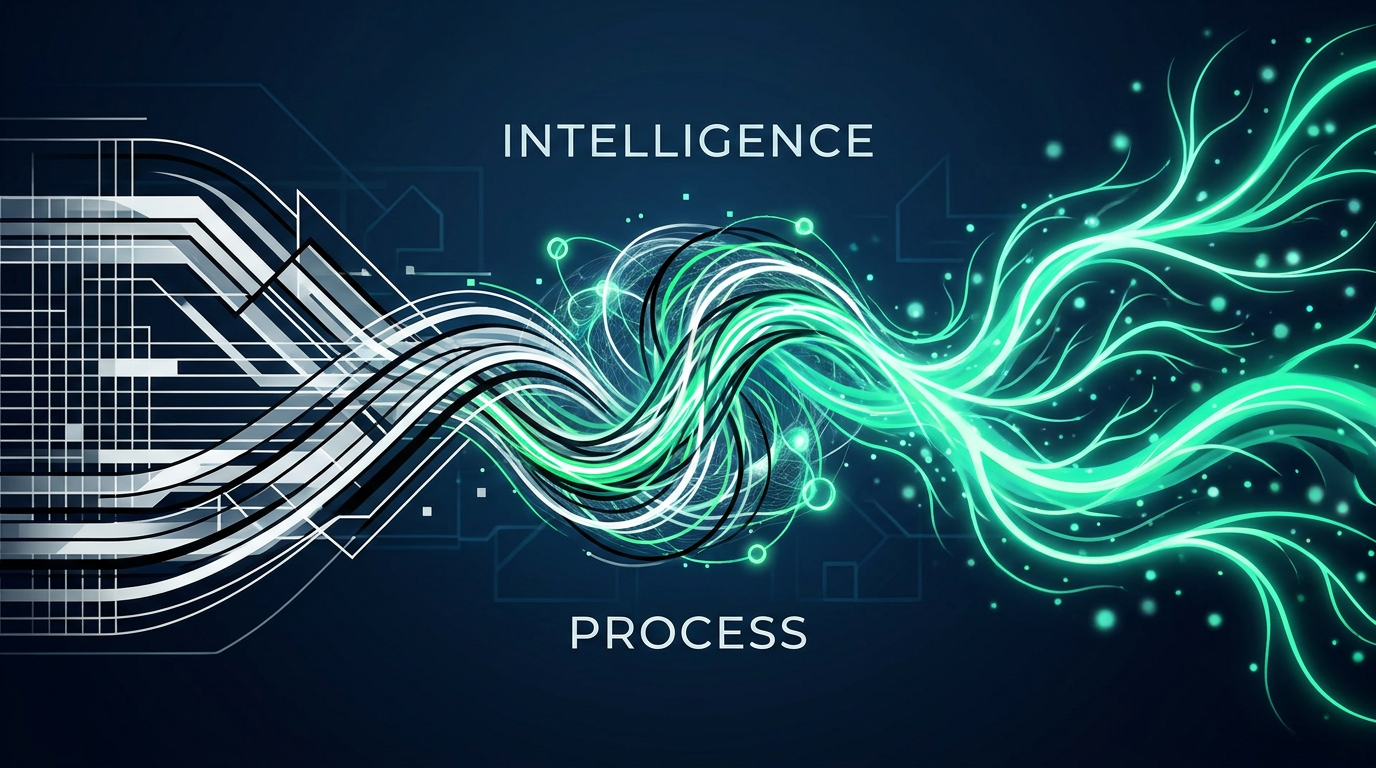
AI automation, on the other hand, introduces intelligence into the process. This is where the concepts of automation and AI merge. Instead of just following rules, AI-powered systems can learn from data, understand context, and make decisions. This capability comes from machine learning, a subset of AI that allows software to improve its performance on a task over time without being explicitly reprogrammed. According to a foundational report from The Royal Society (2017), machine learning is what gives systems the ability to learn from experience.
So, what is the difference in practice?
- Traditional Automation: A system that automatically sends an invoice to every customer at 9 am on the first of the month.
- AI Automation: A system that analyses a customer's payment history, communication style, and invoice size, then decides the optimal time and follow-up messaging to send for the highest chance of prompt payment.
This ability to handle nuance and unstructured data is what makes it so powerful for SMEs. It's not about replacing people, but about augmenting their capabilities, freeing them from repetitive, judgement-based tasks to focus on strategic work. As technology leaders like Microsoft explain, it's about creating a "digital workforce" that can handle complex workflows.
Real-World AI Automation Examples for UK SMEs
Theory is one thing, but how does this apply to your business? The key is to stop thinking about AI and start thinking about your biggest operational headaches. According to a report by Innovate UK (2023), the service sector has immense opportunities to use AI for productivity gains. Here are a few practical examples.
Streamlining Operations
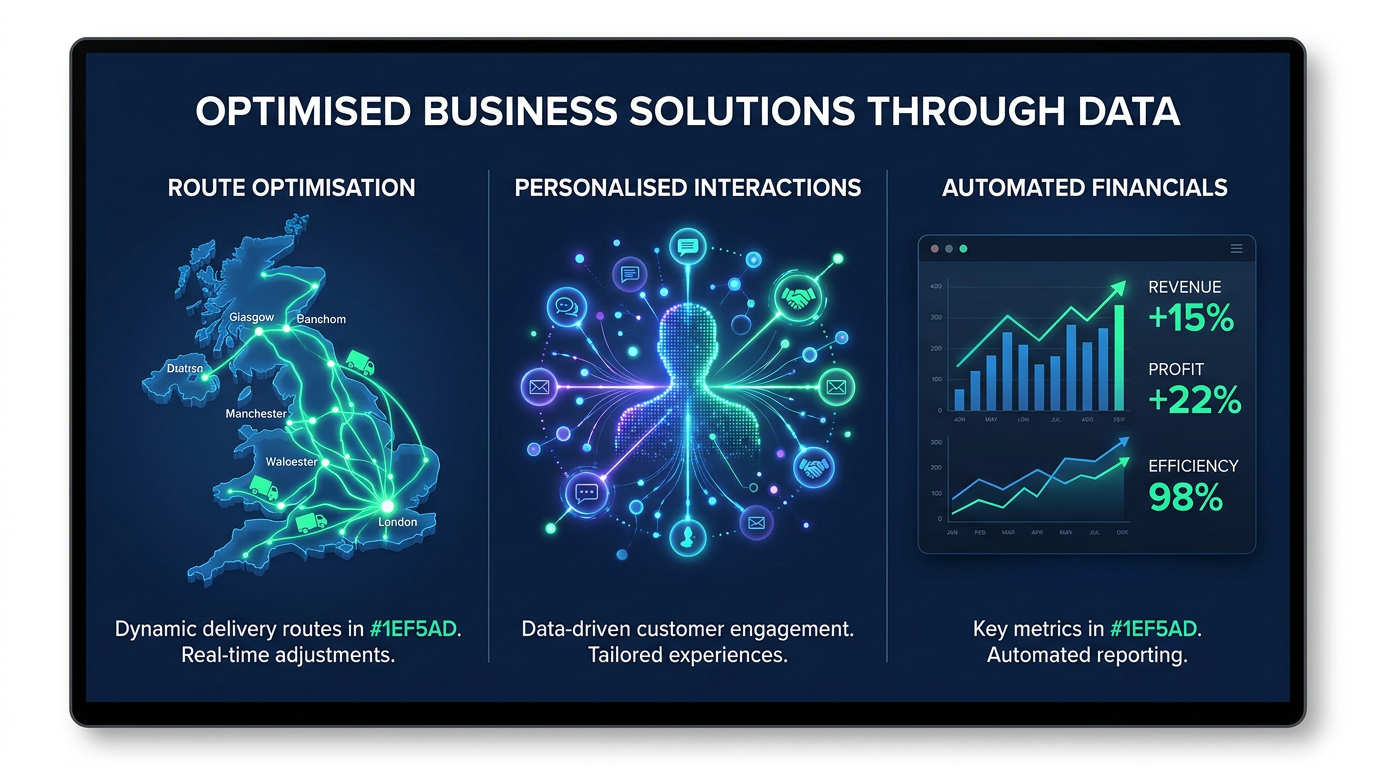
For businesses managing physical goods or complex client services, AI automation can be transformative. Consider a Midlands-based distribution company. They could use AI to analyse traffic patterns, weather forecasts, and delivery addresses to automatically create the most fuel-efficient routes for their drivers each day, saving time and cutting costs. Similarly, a professional services firm can automate the client onboarding process. An ai workflow automation system can send welcome packets, schedule kick-off meetings based on calendar availability, and create project folders, all triggered by a signed contract.
Enhancing Marketing and Sales
Your marketing and sales teams are sitting on a goldmine of data. AI automation helps you use it effectively. Instead of sending generic email blasts, an AI tool can personalise campaign content for different segments of your UK customer base, analysing past purchase behaviour and engagement to predict what they'll respond to. For sales, our proprietary 40-Point Lead Intelligence System is a prime example. It automatically researches prospects, analyses their company's needs, and provides sales reps with tailored talking points, turning cold calls into warm, informed conversations. This is human-centred AI in action.
Optimising Finance and Administration
Few things are more time-consuming than financial admin. AI automation can significantly reduce this burden. Imagine a system that automatically extracts data from supplier invoices, cross-references it with purchase orders, and flags any discrepancies for review-all while ensuring compliance with the UK's Making Tax Digital requirements. It can also automate expense reporting, using a smartphone app to scan receipts, categorise spending, and submit reports, freeing your team from tedious data entry. This directly addresses the productivity goals that a Confederation of British Industry (CBI) survey found were driving AI adoption.
Case Study: A Hypothetical UK E-commerce Retailer
- Challenge: A growing online fashion retailer was spending over 20 hours per week manually responding to common customer queries about order status, returns, and sizing, leading to slow response times during peak seasons.
- Solution: We implemented a custom AI-powered chatbot on their website, integrated with their stock and order management systems. The bot was trained on their specific product catalogue and return policies.
- Results: The chatbot successfully handled 65% of all incoming customer queries automatically. This freed up the equivalent of one full-time employee, reduced average response time from 6 hours to instant, and increased customer satisfaction scores by 15% within three months.
- Key Insight: Automating high-volume, repetitive queries allowed the human support team to focus on complex, high-value customer issues, improving both efficiency and service quality.
How to Implement AI Automation in Your UK Business
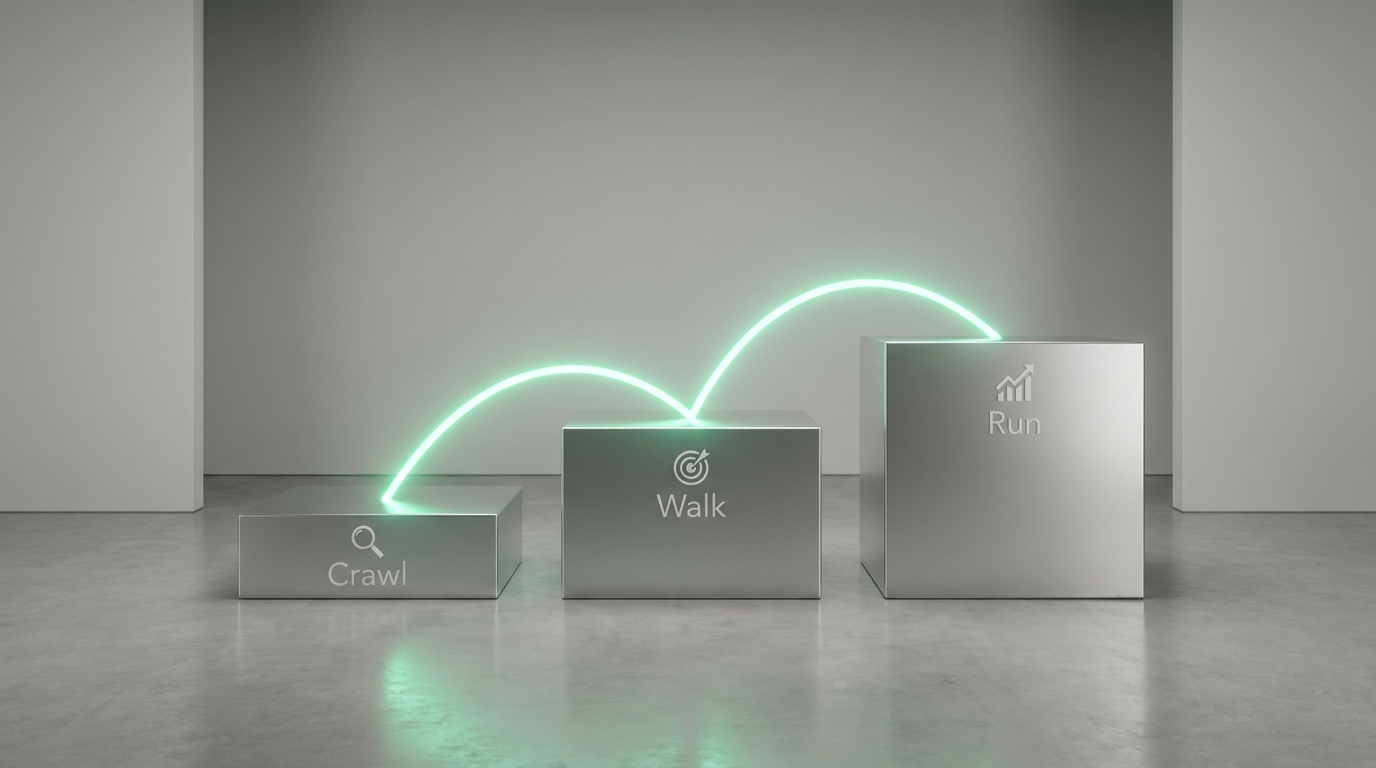
an effective way to implement AI automation is to follow a structured, risk-managed process. At Up-Stride, we call this our Crawl, Walk, Run - AI Adoption Methodology. It’s designed to prevent overwhelm and ensure you get a return on investment at every stage. Here is a simplified version you can follow:
- Identify Bottlenecks: Forget the technology for a moment. Where does work get stuck in your business? What repetitive tasks consume the most person-hours? Is it manual data entry, lead qualification, or financial reconciliation? Start with the business problem, not the AI solution.
- Prioritise Opportunities: Not all problems are created equal. Use a simple impact vs. Effort matrix to map out your potential projects. Look for a high-impact, low-to-medium-effort task for your first pilot. This will give you a quick win and build confidence within the team.
- Assess Your Resources: Be honest about your in-house capabilities. A 2024 report from the Department for Science, Innovation and Technology (GOV.UK) highlights a lack of skilled staff as a major barrier for SMEs. Do you have the data, systems, and expertise to tackle this project? If not, this is the point to consider a partner.
- Start Small & Measure: This is the 'Crawl' phase. Choose one well-defined pilot project. Before you begin, define what success looks like. How will you measure the Return on Investment (ROI)? This could be hours saved, errors reduced, or leads generated. A successful pilot provides the business case to 'Walk' and then 'Run'.
- Ensure Compliance: As you plan your ai workflow automation, especially if it involves customer data, compliance is non-negotiable. You must adhere to the UK General Data Protection Regulation (UK GDPR). The Information Commissioner's Office (ICO) provides excellent guidance and risk toolkits to help you build trustworthy AI.
Following a clear process like this provides a practical AI implementation plan that de-risks your investment and focuses on tangible outcomes.
The Strategic Choice: Off-the-Shelf Tools vs. A Specialised Partner
Once you’ve identified an opportunity, you face a key decision: do you use a simple, off-the-shelf tool, or do you work with a specialised partner? There's no single right answer-it depends entirely on your specific goals, complexity, and resources.
Off-the-shelf platforms like Make.com or Zapier are fantastic for connecting different apps and automating simple, linear tasks. They are low-cost, quick to set up, and well-suited for what we call 'task automation'. For example, you can easily create a rule that when a new lead comes in via a website form, it automatically creates a new contact in your Customer Relationship Management (CRM) system and sends a notification to a Slack channel. They are an excellent entry point into the world of automation.
However, when you need to automate a core business process that requires decision-making, data interpretation, or integration with bespoke or legacy systems, the limitations of these tools become apparent. This is where partnering with an ai automation agency uk provides a strategic advantage. A specialist partner doesn't just connect apps; they design and build ai automation services tailored to your unique workflow. They can handle the complexities of data security, ensure compliance with UK regulations, and build a scalable solution that becomes a true competitive asset. You can explore a deeper comparison of Bespoke AI solutions versus off-the-shelf tools to inform your decision.
The table below breaks down the key differences:
| Factor | Off-the-Shelf Tools (e.g., Make, Zapier) | Specialised Partner (e.g., AI Automation Agency) | Key Consideration for UK SMEs |
|---|---|---|---|
| Complexity & Customisation | Best for simple, linear workflows connecting standard apps. Limited customisation. | Handles complex, multi-step processes with decision logic. Fully bespoke to your needs. | Does the process require judgement or just data transfer? |
| Initial Cost & Speed | Low monthly subscription fees. Can be set up in hours or days. | Higher initial investment. Implementation takes weeks or months. | What's the budget and urgency for a quick win versus a long-term solution? |
| Scalability & Maintenance | You are responsible for maintenance. May hit limitations as you scale. | Built for scalability. Includes ongoing support and optimisation. | Will this process need to handle 10x the volume in two years? |
| Strategic Value & ROI | Delivers efficiency gains on specific tasks. ROI is typically quick but modest. | Creates a unique competitive advantage. ROI is higher but takes longer to realise. | Are you trying to save an hour a day or transform a core business function? |
| Compliance & Security | Responsibility for UK GDPR compliance rests with you. Data may be processed overseas. | Expert guidance on UK GDPR and data security. Ensures compliant data handling. | Does the workflow involve sensitive or personal customer data? |
Frequently Asked Questions About AI Automation
What is AI automation?
AI automation is the use of intelligent systems to perform complex tasks that traditionally required human judgement. Unlike simple automation that just follows rules, it can handle ambiguity, learn from data, and improve its performance over time. This makes it effective for processes like analysing customer feedback, qualifying sales leads, or forecasting inventory needs, bringing a new level of intelligence to your business operations.
Is AI the same as automation?
No, automation follows pre-programmed rules, while Artificial Intelligence (AI) simulates human intelligence to make decisions. An analogy helps: a simple automated email sends at a set time (automation). A system using automation and AI can decide an effective time, content, and subject line for each individual recipient based on their past behaviour to maximise engagement. They are related, but AI adds a crucial layer of learning and adaptation.
How can you use AI automation to make money?
AI automation generates revenue primarily by increasing efficiency and creating new opportunities. This includes reducing operational costs by automating manual tasks like data entry, which frees up staff for higher-value work. It also boosts sales through hyper-personalised marketing and faster lead qualification. For an SME, this translates directly to improved profit margins and a stronger competitive position in the market.
Is AI automation a good career?
Yes, AI automation is an excellent and rapidly growing career path. The World Economic Forum (2023) Future of Jobs Report identifies 'AI and Machine Learning Specialists' as one of the fastest-growing job categories. Professionals with skills in this area are in high demand across all industries, offering strong job security and significant earning potential as companies increasingly invest in this technology.
How do I get into AI automation?
Entry into AI automation typically involves a blend of learning foundational concepts and gaining hands-on experience. You can start with online courses on platforms like Coursera or edX covering Python, machine learning principles, and popular automation tools like Make or Zapier. The next step is to apply these skills to small personal projects or freelance work to build a practical portfolio that demonstrates your capabilities to potential employers.
Is AI automation difficult to learn?
The difficulty depends on the depth of knowledge you seek and your starting point. Learning to use no-code AI automation tools can be relatively straightforward for business users with a knack for technology. However, becoming a specialist who builds custom AI models from scratch requires a deeper understanding of programming, statistics, and machine learning theory, which presents a much steeper and more technical learning curve.
What jobs will be gone by 2030?
Jobs involving highly repetitive, data-driven tasks are the most likely to be transformed by AI automation. This includes roles centred on data entry, basic administrative support, and certain types of process-based analysis. However, this often leads to a shift in focus towards more strategic, creative, and interpersonal responsibilities within those same job roles, rather than outright elimination. The nature of the work evolves.
Which 3 types of jobs will survive AI?
Jobs requiring complex strategic thinking, creativity, and deep interpersonal connection are the most resilient to automation. First, strategic leadership roles that set business vision and navigate complex markets. Second, creative professions like design and R&D that require novel ideas. Third, 'high-empathy' roles like therapists or senior care workers, where genuine human connection is the core value.
Can I get an AI job with no experience?
While challenging, it is possible to enter the AI field with no formal job experience by demonstrating practical skills. The key is to create a strong portfolio of personal projects that showcase your ability to solve problems with AI. Contributing to open-source AI projects on platforms like GitHub or participating in data science competitions on Kaggle provides tangible evidence of your skills that can often outweigh a traditional CV.
What are AI Agents?
AI agents are smart software programs designed to act as autonomous digital team members. Unlike simple automation, they can understand a complex goal, create a plan of action, and then execute multi-step tasks to achieve it without direct supervision. For an SME, an AI agent could be tasked with conducting comprehensive market research, managing a project schedule, or handling complex customer support inquiries from start to finish.
Important Considerations and Limitations
The field of AI is evolving at an unprecedented pace. The tools, costs, and capabilities discussed in this article are based on the landscape as of late 2026. Business leaders should be aware that new advancements may alter the specific recommendations, and ongoing education is crucial. Furthermore, the data from cited reports reflects trends up to their publication dates and may not capture the very latest market shifts.
While this guide focuses on AI automation, it is not the only solution for improving business efficiency. Alternative approaches include traditional Business Process Automation (BPA) for simpler, rule-based tasks, lean process improvement methodologies to optimise workflows without new technology, and simply investing in better training for staff. For many SMEs, a combination of these approaches may yield an effective results.
Implementing AI, particularly solutions that process personal or sensitive data, carries significant strategic and legal responsibilities. For complex projects or those with high compliance requirements under UK GDPR, we strongly recommend consulting with a specialised AI partner or legal expert. They can help you handle the complexities of data governance, security, and ethical considerations to ensure your implementation is both effective and lawful, helping you understand the risks of Shadow AI.
Your Next Step Towards Intelligent Automation
Making a successful start with AI automation hinges on a pragmatic, problem-focused approach. For UK SMEs, the goal is not to chase the latest technology, but to apply well-supported by research, accessible solutions to solve real-world bottlenecks in operations, marketing, and administration. By identifying high-impact opportunities and starting with a manageable pilot project using a framework like our Crawl, Walk, Run - AI Adoption Methodology, you can build momentum and demonstrate clear ROI, turning AI from a buzzword into a powerful engine for growth.
If you're ready to move beyond theory and explore how a human-centred strategy could transform your business, the team at Up-Stride is here to help. We specialise in creating practical AI solutions for UK SMEs. Our human-centred AI consulting services are designed to bridge the AI advantage gap. Book a free, no-obligation consultation to discuss your specific challenges and discover what's possible.
References
- Department for Science, Innovation and Technology (GOV.UK) - Government Report (2024). This study estimates the UK AI market's value and identifies the 'lack of skilled staff' as a key barrier to SME adoption.
- UK Government - Government Strategy Paper. Details the UK's 10-year plan to support the AI ecosystem and ensure effective governance.
- Information Commissioner's Office (ICO) - Regulatory Guidance. Provides the official risk toolkit for complying with UK GDPR when using AI.
- Stanford Institute for Human-Centered Artificial Intelligence (HAI) - Annual Academic Report. Offers comprehensive global data on AI investment, model capabilities, and public perception.
- Organisation for Economic Co-operation and Development (OECD) - International Body Policy Observatory. Provides international principles for trustworthy AI and live data on AI adoption across countries.
- Innovate UK - Government Agency Report (2023). Details AI opportunities and use cases for UK service sector businesses.
- The Alan Turing Institute - National Institute Research Report. Explains AI as a 'general-purpose technology' and outlines challenges for UK businesses like data access and trust.
- World Economic Forum - Global Survey Report (2023). This report, based on a survey of 803 companies, projects that 75% of firms will adopt AI and identifies 'AI and machine learning specialists' as a top-trending role.
- Confederation of British Industry (CBI) - Business Organisation Survey. This survey of UK firms found that over half use AI, driven by productivity goals, but are hindered by 'unclear ROI'.
- The Royal Society - Scientific Academy Report. This foundational report provides an authoritative explanation of machine learning technology and its applications.
- Microsoft - Corporate Explainer. Defines AI automation as a means to create a digital workforce to handle complex, end-to-end business processes.
- Make - Vendor Guide (2026). Provides a guide to AI automation, distinguishing it from traditional automation by its ability to handle unstructured data and make decisions.
- Zapier - Vendor Guide. Explains how AI and automation work together to tackle more complex tasks than rule-based automation alone can handle.
Conclusion
Your Next Step Towards Intelligent Automation
In summary, AI automation for UK SMEs hinges on a pragmatic, problem-focused approach rather than a purely technological one. The goal is not to chase the latest trend, but to apply proven, accessible solutions to solve real-world bottlenecks in operations, marketing, and administration. By identifying high-impact opportunities and starting with a manageable pilot project, you can build momentum, demonstrate clear ROI, and turn AI from a buzzword into a powerful engine for sustainable growth.
If you're ready to move beyond theory, the next step is to explore tailored ai automation services. As a leading ai automation agency uk-based SMEs can rely on, the team at Up-Stride is here to help. We specialise in creating practical, human-centred AI consulting services that solve your specific challenges. Book a free, no-obligation consultation to discover what's possible for your business.